DR
Dr. Rajesh M.BAMS Practitioner · Pune
★★★★★
“The case-based structure makes consultation much easier to organise. I especially liked the patient → pattern → stage → management flow.”
✓ Verified Reader
100+ Real Clinical Cases + The Complete Practice Manual — everything your BAMS degree skipped, in two books that actually work in OPD.
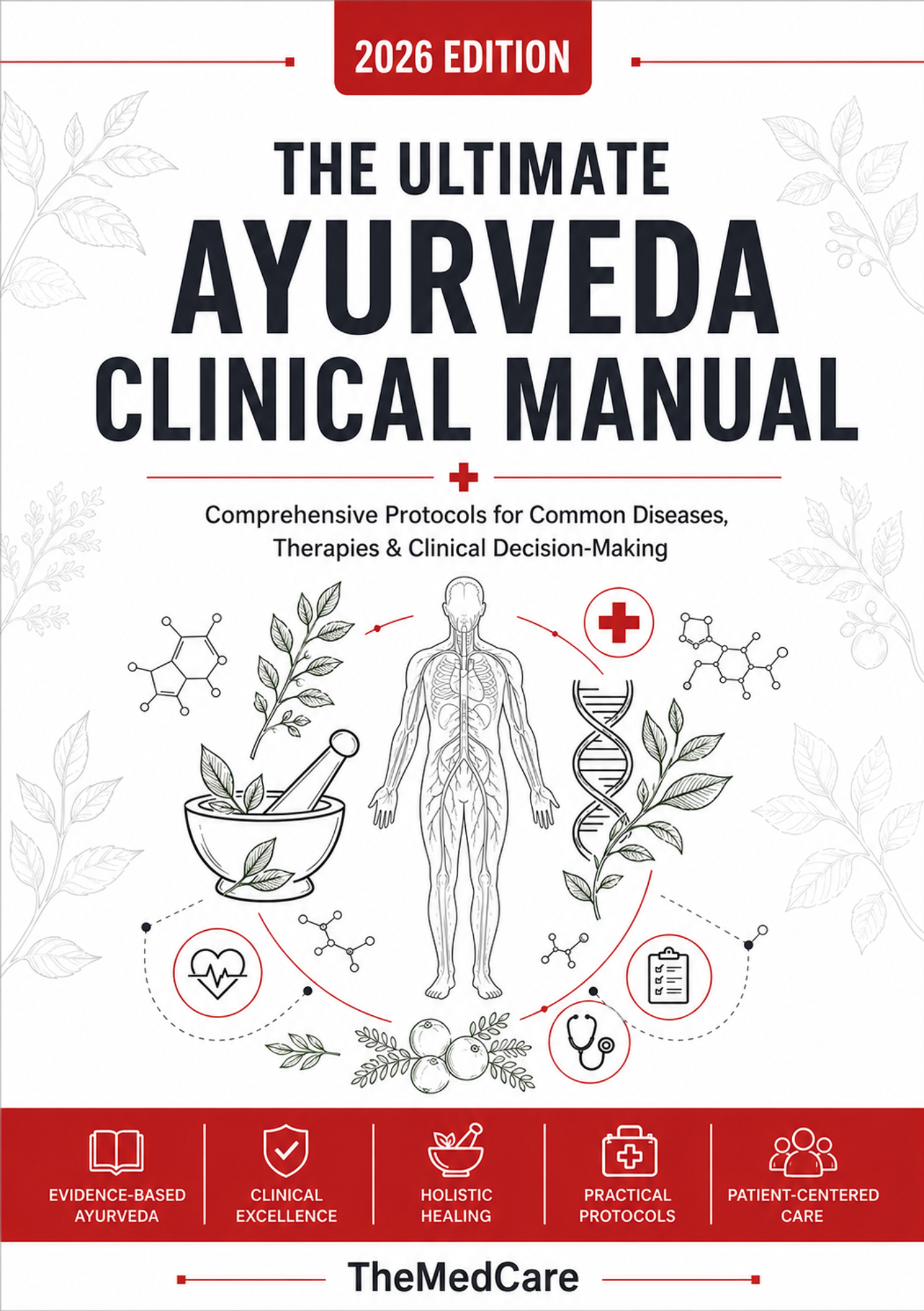
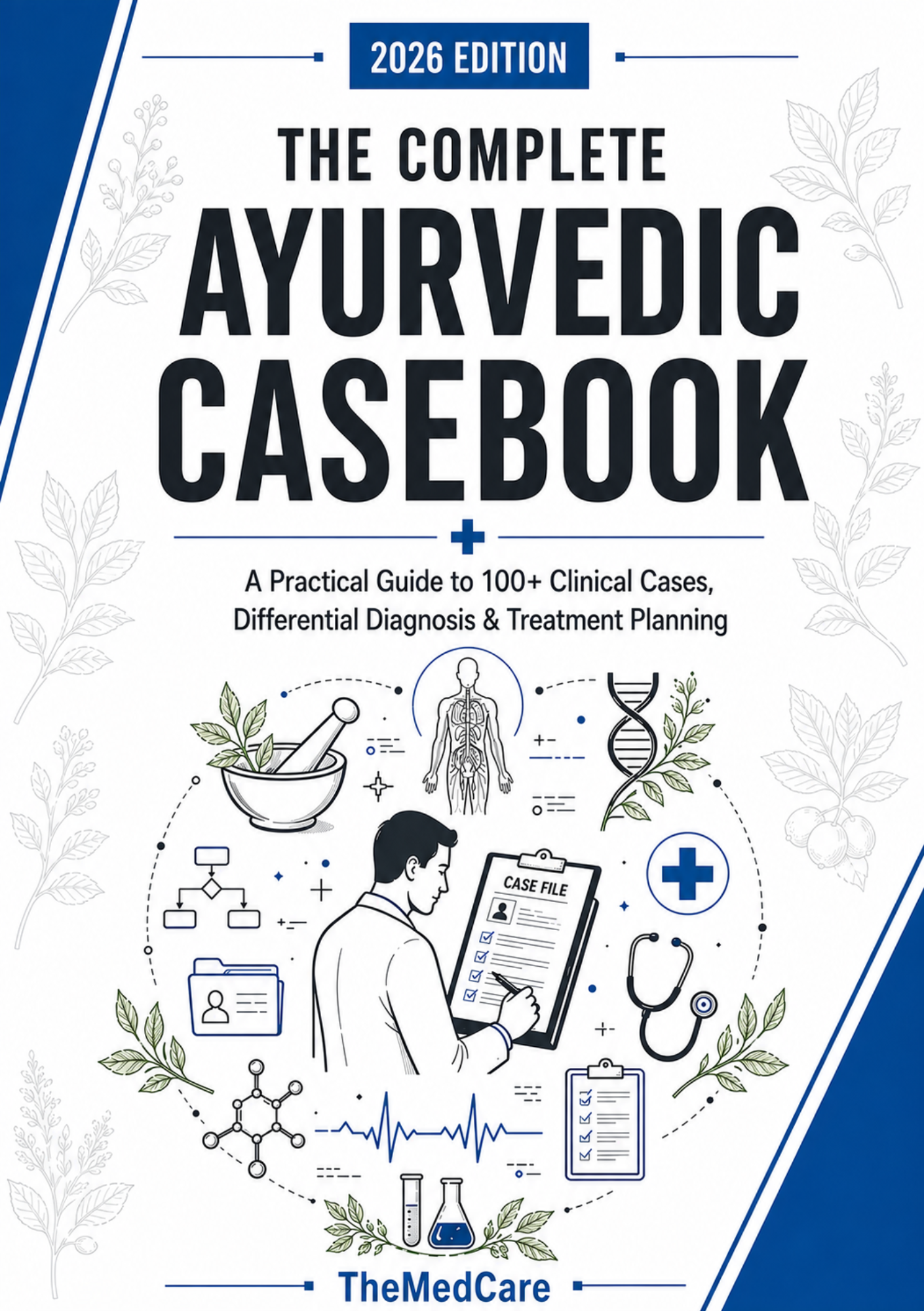
The problem isn't your knowledge. It's that BAMS never taught you how to use it when a real patient is sitting in front of you.
You know the theory. But converting a complaint into a structured clinical decision? Nobody taught you that framework.
Most failures happen because Nidana wasn't identified and disease stage wasn't assessed. The same mistake, over and over.
You can recite 50 formulations — but which one for this patient, at this stage? That clarity was missing.
Knowing when to treat vs. refer is never explicitly taught. Missing it can cost a patient — and your reputation.
Prescribing Panchakarma without proper Purva Karma staging and patient selection is a common, dangerous error.
Without a repeatable system, every unfamiliar case shakes your confidence instead of building it.
Clinical competence is determined by the quality of decisions made in the first few minutes of patient evaluation — not by the number of formulations you remember.
Not textbooks. Not theory dumps. Structured decision frameworks built for daily OPD use.
These are actual pages from the books — the same tables, cases and checklists you'll be using in OPD.


👆 Tap any page to view it full size
Specific. Practical. Clinical — not vague promises.
Patient → Pattern → Cause → Stage → Management. No guesswork.
Master these and no case will feel unfamiliar again.
Same disease, different stage = completely different management.
Break the disease pathway at the right point instead of suppressing symptoms.
The 4-Station model — nothing important gets missed, however busy the OPD.
Knowing when NOT to treat is as important as knowing when to.
From Amlapitta to Amavata — diagnosis, staging, management, follow-up.
Purva Karma, patient selection, complication monitoring — all covered.
| Feature | This System | Typical Guide |
|---|---|---|
| 100+ real cases with full clinical reasoning | ✔ | ✘ |
| Disease staging framework for management | ✔ | ✘ |
| Samprapti Vighatana explained clinically | ✔ | ✘ |
| Nidana-first approach in every case | ✔ | ✘ |
| 30 ready-to-use OPD protocol charts | ✔ | ✘ |
| Panchakarma selection + complications | ✔ | ✘ |
| 30 red flags + referral framework | ✔ | ✘ |
| Non-responder audit for difficult cases | ✔ | ✘ |
Photo-ready review cards for verified customer feedback. Replace each placeholder with the customer's actual photo and review.
“The case-based structure makes consultation much easier to organise. I especially liked the patient → pattern → stage → management flow.”
“The 4-Station consultation model is practical for OPD. The red-flag section is also useful as a quick reference.”
“Samprapti Vighatana was difficult to apply clinically. The examples helped me connect the concept with actual case management.”
“The non-responder audit is useful when a case is not progressing as expected. I also liked the structured checklists.”
“The protocol charts make the manual convenient to keep beside the desk. The information is organised for quick reference.”
“I bought the hard copy because I wanted a physical reference for daily study. The staging framework is particularly helpful.”
Both versions contain the complete 2-book system. Hard copy includes the digital copy free.
210+ pages. 100+ real cases. 30 protocol charts. One complete clinical framework.